
Detailed Peanut Butter Production Process
Peanut butter is a highly nutritious food made primarily from peanuts. It has a smooth texture and rich aroma, and is widely used in breakfast, baking, and seasoning. While its production seems simple, each step directly affects the final taste and quality. Below is the standard peanut butter processing flow step by step:
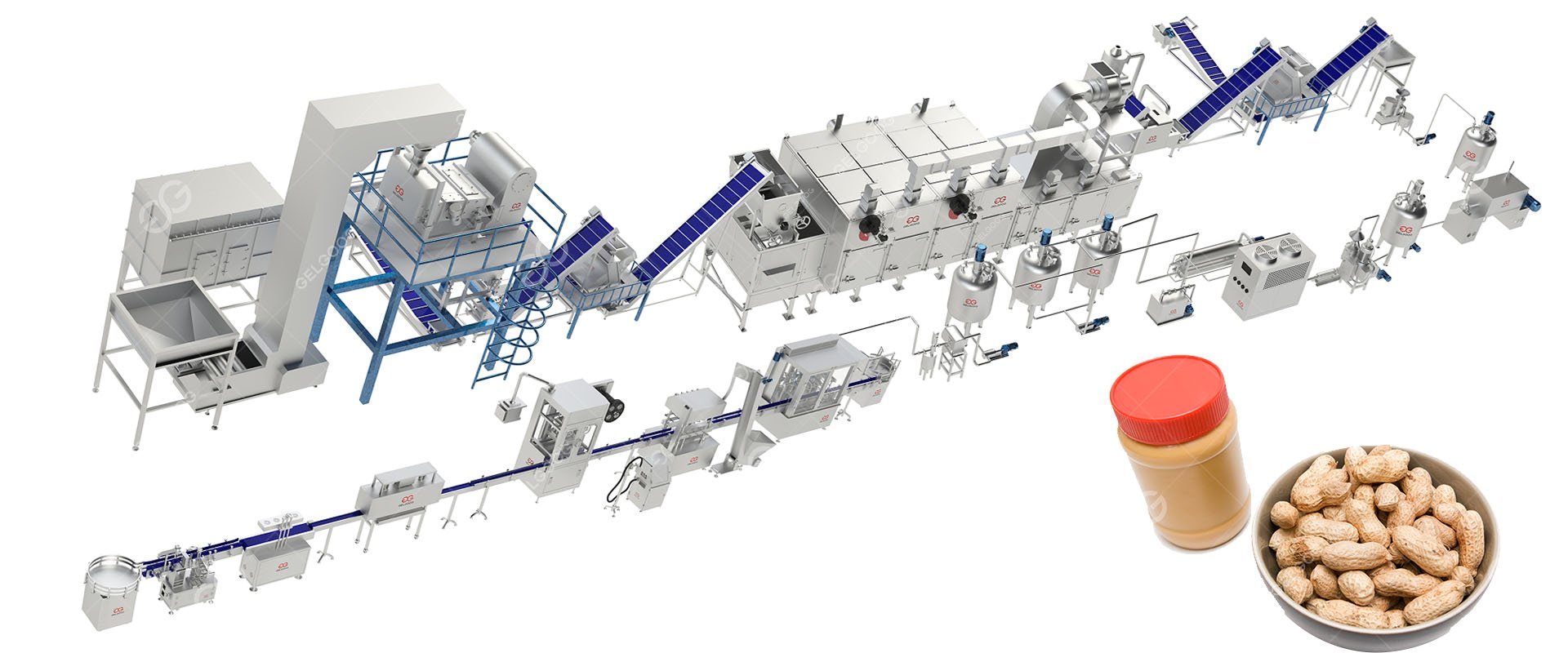
Step 1 Raw Material Selection and Cleaning
High-quality peanuts are the foundation of peanut butter. Typically, plump, high-oil-content, mold-free, high-oleic-acid peanuts or peeled peanut kernels are selected as raw materials. The peanuts are screened to remove stones, dust, damaged kernels, and metallic impurities.
Step 2 Roasting and cooling
Roasting is a crucial step in developing the aroma of peanut butter. The peanuts are roasted to a light brown color, while removing excess moisture and allowing the peanut aroma to be fully released. After roasting, the peanuts are at a high temperature and need to be cooled to room temperature with cold air before peeling.
Step 3 Peeling
The red skin and germ are removed using a peanut peeling machine to prevent bitterness and maintain color.
Step 4 Grinding
The peeled peanut kernels enter peanut butter grinder (Colloid Mill) for grinding to grind the peanuts into a fine paste.
Step 5 Mixing & Homogenizing
The ground peanut paste is mixed with the following ingredients according to product requirements: Salt, Sugar, Vegetable oil (e.g., peanut oil or palm oil), Stabilizers and anti-separation agents (e.g., monoglycerides, lecithin). After mixing, the mixture is homogenized to ensure thorough blending and maintain the smoothness and fluidity of the peanut butter.
Steep 6. Degassing & Sterilization
To extend shelf life, the mixed peanut butter undergoes vacuum degassing to remove air bubbles and oxygen, followed by pasteurization or ultra-high temperature sterilization to inhibit microbial growth and ensure food safety.
Step 7. Filling & Sealing
The sterilized peanut butter is then aseptically filled into glass bottles, plastic jars, or squeeze bags. Following sealing, labeling, and coding, the final product is formed.
Step 8: Cooling & Packing
The finished peanut butter is cooled before entering the outer packaging process. Depending on market demand, the following methods may be used:
- Vacuum packaging
- Carton packaging
- Batch numbering and factory inspection
- Finally, it is sent to the finished product warehouse, awaiting shipment.
Step 9. Quality Inspection and Storage
Several tests are required before shipment, including:
- Viscosity and stability
- Microbial content
- Oil separation
- Sensory inspection (color, aroma, taste)
Qualified products should be stored in a cool, dry place and can be stored at room temperature for 6–12 months.
Summary
Although the peanut butter production process is clearly defined, each step has a significant impact on flavor and quality. From raw material selection to grinding, mixing, sterilization, and filling, each step requires precise control and efficient equipment.
With the application of modern processing equipment, peanut butter production has become automated, continuous, and standardized, not only improving production efficiency but also ensuring product consistency and hygiene safety. If you want to learn more about peanut butter production line, just feel free to contact us.